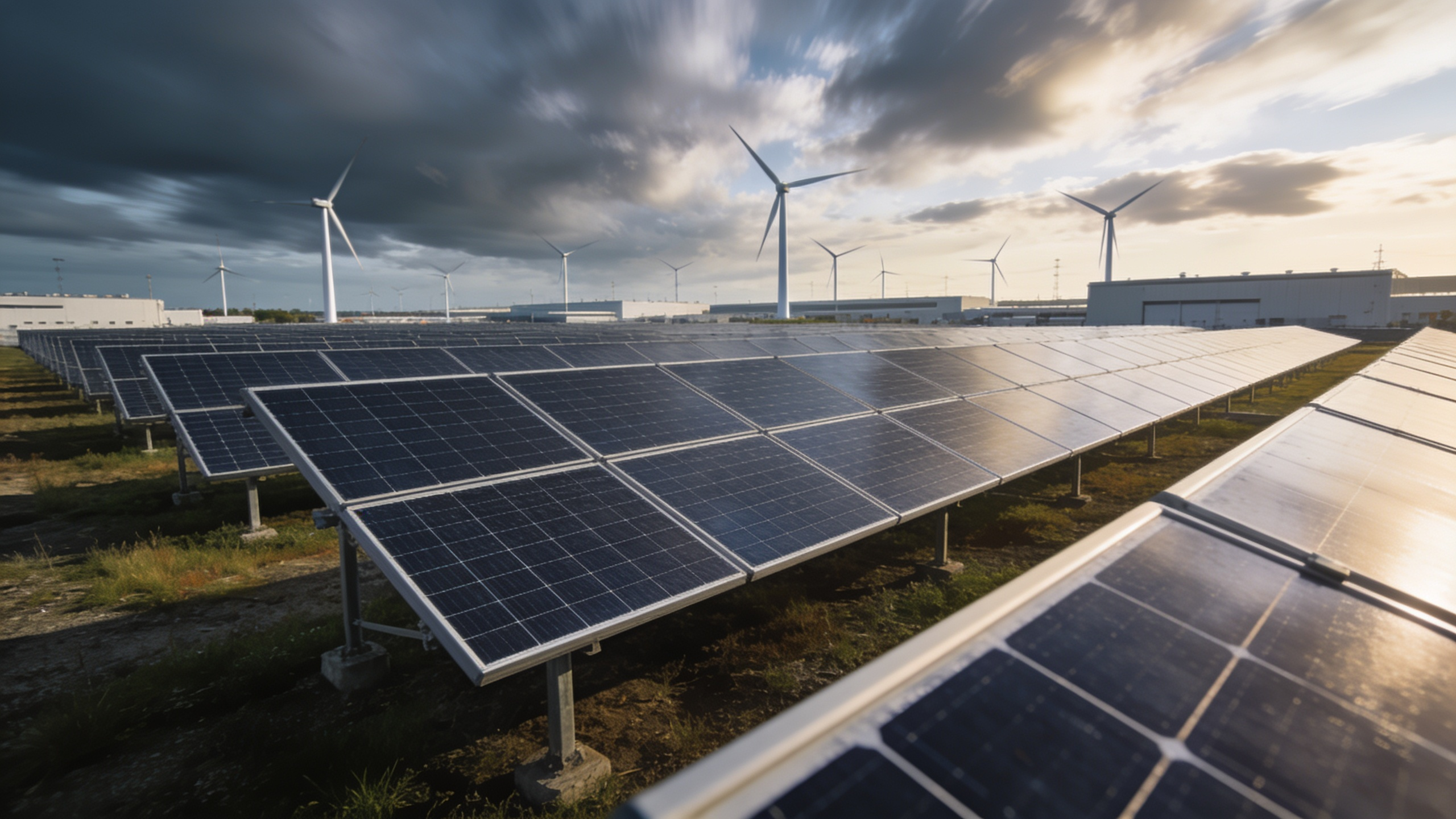
Keeping Hydrogen Production Running Through Solar and Wind Swings: A Buyer’s Guide
Maintaining steady hydrogen output on a resource that swings hour to hour and disappears at night comes down to one decision more than any other: which electrolyzer can start, stop, and run at partial load without degrading. Backup power and oversizing help at the margins, but the architecture underneath the plant is what actually determines whether fluctuating renewables become a manageable input or a persistent drag on output. This guide breaks down what separates a good fit from a poor one.
Why Fluctuating Power Breaks Most Installed Electrolyzers
The two most widely deployed electrolyzer types both struggle with variable input, for different reasons. Alkaline systems lose efficiency at low load and generally cannot run safely below roughly 30 percent of rated capacity, where gas crossover becomes a real risk. They also restart slowly from cold, sometimes taking well over an hour to reach operating temperature. PEM systems ramp faster, but they rely on a fluoropolymer membrane and platinum-group-metal catalysts that degrade under repeated on/off cycling.
The durability penalty here isn’t a vendor claim, it shows up in independent research. Peer-reviewed studies have found electrolyzers degrading roughly three times faster under wind-driven shutdown events compared with steady operation, along with accelerated membrane thinning and catalyst loss under repeated cycling. Point either conventional technology at a resource that spends much of its time ramping or idle, and the wear adds up faster than the nameplate efficiency numbers suggest.
The Two Real Requirements for Handling Variable Power
An electrolyzer suited to fluctuating renewable generation needs to clear two bars at once. First, it has to tolerate frequent on/off cycling without accelerated wear, since a resource like solar or wind means the plant is starting and stopping constantly rather than running at a steady setpoint. Second, it has to stay efficient across a wide load range, including low output, so the plant keeps producing hydrogen during weak-generation periods instead of shutting down entirely. A stack that’s a few points more efficient at full load but can’t cycle is a poor match for a resource that spends much of its time at partial load or off.
Fast cold-start capability matters too. A system that can resume production within minutes of power returning captures far more of the available generation than one that needs an hour to reheat before it can run again.
Storage, Oversizing, and Where the Cost Actually Sits
Energy storage can smooth production, but it isn’t free, and the right amount is whatever the electrolyzer’s own limitations require, not more. Batteries let a plant avoid an electrolyzer’s worst operating states, and oversizing solar or wind relative to the electrolyzer raises the effective capacity factor. Both options add capital cost, and every added battery or extra megawatt of panels raises the levelized cost of hydrogen.
This is where the electrolyzer choice compounds. A system that tolerates deep cycling and low-load operation needs less storage to hit the same production target than one that has to be babied through every ramp and restart. Financial models that treat storage as a fixed requirement, rather than a variable that depends on the stack’s own tolerance, tend to overstate the cost of pairing hydrogen production with renewables.
Materials and Regulatory Exposure
Material sourcing affects both cost stability and compliance. Platinum-group metals such as iridium and platinum carry real supply and price risk, and the PFAS membranes used in PEM systems face tightening restrictions in the European Union. Electrolyzers that avoid these inputs reduce exposure to both supply shocks and future compliance costs. Separately, hydrogen sold into EU markets increasingly needs to meet Renewable Fuel of Non-Biological Origin rules, which govern how the electricity powering the electrolyzer is sourced and matched in time. A system that runs directly on renewable power without grid backup offers a more straightforward path to demonstrating that match.
What a Purpose-Built Design Changes
Electrolyzers engineered around variability from the start, rather than adapted from a baseload design, approach the problem differently. A membraneless, decoupled architecture produces hydrogen and oxygen at separate times using a bifunctional electrode and a nickel-based counter-electrode that charges and discharges, removing the membrane that limits cycling tolerance in conventional stacks. That structural choice is what allows some newer systems to run at very low minimum loads and absorb thousands of on/off cycles without the wear documented in conventional alkaline and PEM research.
Comparing Three Approaches to Variable-Power Operation
H2Pro, Ohmium, and Sunfire sit at different points on this spectrum, and lining them up on the factors that matter for fluctuating renewable generation shows where each fits best.
| Factor | H2Pro (DWE) | Ohmium (modular PEM) | Sunfire (SOEC / alkaline) |
|---|---|---|---|
| Cycling tolerance | Designed for unlimited on/off cycling (company-reported) | Ramps well; membrane wear accumulates under heavy cycling | Poor for SOEC; alkaline line is moderate |
| Minimum operating load | Roughly 3% of rated capacity (company-reported) | Lower than legacy alkaline, higher than DWE | ~20-30% for alkaline; SOEC needs steady load |
| Cold-start speed | Fast, ambient-temperature operation (company-reported) | Fast; PEM ramps quickly by design | Slow for SOEC due to high operating temperature |
| Materials exposure | No platinum-group metals, no PFAS (company-reported) | Platinum-group-metal catalysts | Ceramic materials (SOEC); nickel-based (alkaline) |
| Commercial maturity | Pre-commercial; pilot to demonstration scale | Commercial; large modular order books | Commercial; largest deployed SOEC unit operating |
None of the three dominates every row. Sunfire’s alkaline line offers established commercial deployment but shares conventional alkaline’s low-load limits, and its SOEC line is a poor match for fluctuating power altogether. Ohmium’s PEM systems ramp well and are commercially proven, though membrane wear under heavy cycling remains a factor. H2Pro’s DWE architecture targets the cycling and low-load gap directly, at the cost of being the least commercially mature of the three.
Practical Takeaways
Evaluate an electrolyzer on cycling tolerance and low-load efficiency before comparing nameplate numbers, since those two factors determine how much of a variable resource the plant can actually capture. Size storage to the minimum the technology requires rather than defaulting to a fixed buffer. Confirm that both the power sourcing and stack materials support RFNBO compliance if the hydrogen is headed for EU markets. And treat any vendor’s cycling and degradation claims, regardless of the technology, as figures to verify independently rather than accept at face value.
FAQ
Q: What’s the single biggest factor in maintaining hydrogen output through renewable fluctuations?
A: Cycling tolerance. An electrolyzer that degrades every time it starts, stops, or ramps will lose more effective capacity over time than one with a slightly lower efficiency rating that can cycle freely.
Q: Why do alkaline electrolyzers struggle with variable power?
A: They lose efficiency and risk gas crossover below roughly 30 percent of rated load, and they restart slowly from cold, sometimes taking over an hour to reach operating temperature. That makes them a poor match for a resource that ramps constantly.
Q: Does adding a battery solve the variability problem?
A: It helps, but it isn’t free, and the amount of storage actually needed depends on how well the electrolyzer itself tolerates cycling and low load. A more flexible stack needs less storage to hit the same production target.
Q: How does H2Pro’s DWE technology address fluctuating renewable power?
A: By producing hydrogen and oxygen at separate times rather than simultaneously across a membrane, DWE removes the component most responsible for cycling-related wear in conventional electrolyzers. H2Pro reports a minimum load of roughly 3 percent and unlimited on/off cycling, though these are company-reported figures.
Q: Is H2Pro’s technology proven at the same commercial scale as Ohmium or Sunfire?
A: Not yet. H2Pro has run a 0.5 MW pilot and is scaling toward a larger demonstration project, while Ohmium and Sunfire both have larger deployed commercial bases already in operation.
Q: What should a developer verify before selecting an electrolyzer for a variable-power site?
A: Ask for cycle-count and degradation data rather than nameplate efficiency, confirm the minimum operating load and cold-start time, and check what materials the stack depends on given tightening PFAS and platinum-group-metal supply constraints.